
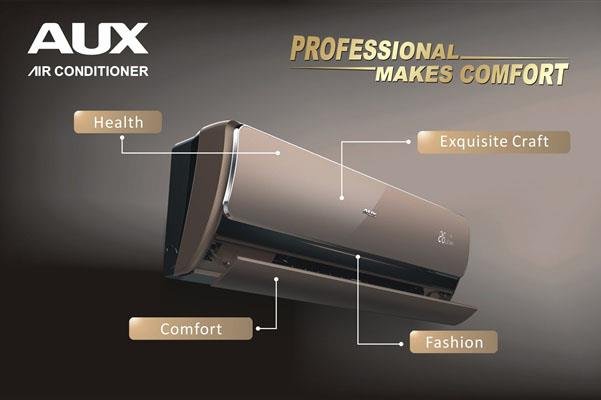
There are some differences between Aux and Matrix air conditioners, despite their shared goal of using less energy and cooling spaces rapidly. The following are some comparisons between Aux and Matrix air conditioners:
Efficiency of Energy
To achieve excellent energy efficiency, auxiliary air conditioners use R32 refrigerant and inverter technology. Matrix air conditioners use inverter technology to reduce electricity costs.
Rate of Cooling
Compared to non-inverter models, auxiliary inverter air conditioners have a faster rate of cooling or heating a space.
Control of Temperature
A precise-control algorithm is used by auxiliary air conditioners to keep the temperature within ±0.5°C.
Dimensions
Apartments and other tiny spaces are the target market for matrix air conditioners, while Aux air conditioners cater to big residential and commercial establishments. However, the horsepower of an AUX air conditioner typically determines its cost, making it more costly than a Matrix air conditioner.
What Feature of the Aux Air Conditioner is Absent from other Brands?
Among the many characteristics of AUX air conditioners are a wireless controller, a long-lasting air filter, and inverter technology. The compressor, condenser coil, evaporator coil, and expansion valve—the essential parts of an air conditioner—are absent from them, though Aux air conditioners employ inverter technology, which provides several advantages:
- Energy efficiency: Because of their variable speed, inverter compressors can modify their power according to the ambient temperature. This can cut electricity costs and reduce energy use.
- Extended lifespan: An air conditioning unit with inverter technology may have a longer lifespan.
- Quicker cooling: Compared to non-inverter air conditioners, inverter air conditioners have the ability to cool a space more quickly.
Other Characteristics that Certain AUX Air Conditioners have include:
The Wi-Fi Module
A built-in Wi-Fi module in certain AUX air conditioners enables remote operation of the unit on a computer, tablet, or smartphone.
Panel of Controls
A control panel on certain AUX air conditioners lets you choose the fan speed, air temperature, working mode, and other settings.
What are the Features of the Matrix Air Conditioner?
Among the many features of matrix air conditioners are the following:
Efficiency of Energy
Matrix air conditioners use R32, a refrigerant that has a lower potential to cause global warming than R410a. Additionally, they operate silently and enhance energy savings by utilizing DC inverter technology.
Modes of Cooling
There are several cooling modes available with matrix air conditioners, including:
- Quiet mode: Modifies the fan speed and airflow to lower noise levels.
Turbo cooling quickly reaches the required temperature by maximizing heating or cooling output.
- 360-degree three-dimensional air delivery: Automatically adjusting deflectors guarantee even airflow in the space.
- Self-assessment
The system automatically identifies unusual components or actions and displays failure codes on the indoor unit.
- Louver’s position memory
The device automatically adjusts the horizontal louver angle to your preferred setting each time you use it.
- Filters
The 3M High Air Flow filter is one of the air purification filters used in certain Matrix air conditioners.
While Aux Air Conditioning and Matrix Air Conditioning both provide reliable and trusted air conditioning services, their market scopes differ.