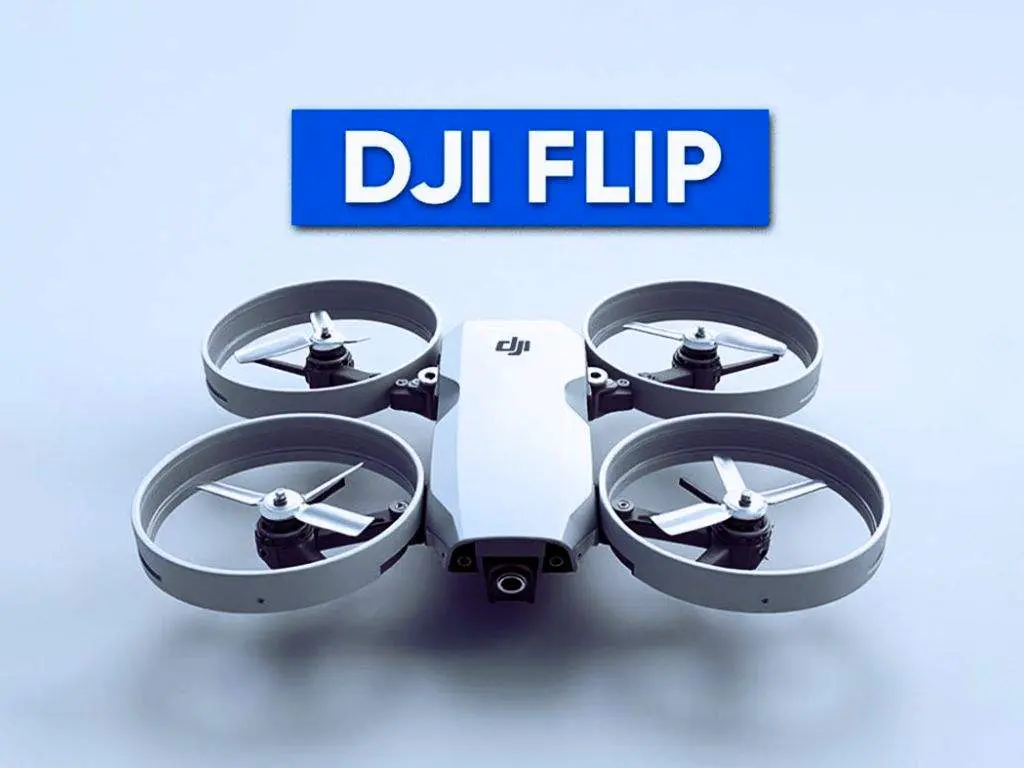
The world’s top drone manufacturer, DJI, shocked us by revealing a brand-new drone that also seems familiar: the DJI Flip, a camera and vlogging drone that doubles as a camera. Its unique, first-of-its-kind folding design has four built-in propeller guards instead of propeller arms. There is no denying that this is a safety-first strategy that complements the drone’s vlogging capabilities, but it also has a rather strange appearance.
Although the Flip is a beginner drone with a beginner-friendly price, the Flip and Mini 4 Pro are entirely different products. My hazy comparison was prompted by the Flip’s camera drone functionality, which includes the ability to take JPEG and raw photos as well as up to 60 fps 4K video in both Standard and D-Log M profiles. Although it has some of the Neo’s many control options and the same subject-tracking capabilities, the DJI Flip is undoubtedly a far more adaptable DJI Neo Drone.
The Price and Date of Release
The DJI Flip, available in three different kit options, made its debut on January 14, 2025. The standard DJI Flip kit costs Php2,890, and comes with the drone, DJI RC-N3 controller, one battery, two spare propellers, and other basic accessories. The DJI RC-2 (smart) controller kit costs Php32,890.
The Fly More Bundle, which costs Php40,890, only includes the DJI RC 2 controller at release; it does not include the less complex DJI RC-N3 controller. All of the above is included in this more complete kit, along with two more batteries, a shoulder bag, a four-battery charging hub, and two more sets of spare propellers. Given the advantages it provides over the basic kit, the Fly More Combo comes at a reasonable price.
The Handling and Design of the DJI Flip
Because the Flip drone from DJI includes propeller guards instead of propeller arms, it is both larger and smaller than its Mini versions. The drone’s propeller guards slide out from under the fuselage for palm takeoff and landing. The drone is safer to fly close to people because of its lightweight carbon fiber string and polycarbonate structure. A 3D infrared sensor on the drone’s front displays the intelligent shooting mode on a black plastic screen. You can operate the Flip using voice control, the DJI Fly app, the DJI RC-N3 or RC-2 smart controllers, or intelligent flying modes. The DJI RC 2 is the most useful option because of its built-in 5.5-inch display.
Characteristics and Performances
The Flip drone can fly at a respectable 27 mph in Sport Mode, even if it doesn’t have a maximum wind resistance. It can take off and land from the ground or the palm of your hand, and it works nicely as a camera drone with conventional controller options. Using the DJI Fly app or the DJI Mic on your smartphone, marketers can advertise the Flip as a vlogging drone.
DJI Flip Image and Video Quality
The Flip camera features a 24mm equivalent focal length and a 3-axis mechanical gimbal for fluid filming. For better low-light photography, it has a 12MP/48MP Quad Bayer 4-in-1 sensor with big pixels and Dual Native ISO Integration. Its digital zoom is up to 4x. The image quality is inferior to that of the DJI Mini drone 3 or Mini 4 Pro, though.